 Holi: The Holi Festival in India is one of the most vibrant and joyful celebrations that marks the arrival of spring and the victory of good over evil. People across the country celebrate this colorful festival with happiness, traditions, and cultural activities.. And how did you begin to celebrate that? The Holi Celebration in Indian mythology began with Indian Society.
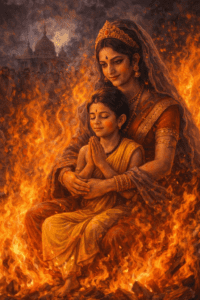
Prahlada, Hiranyakashipu and Holika are some of the other folk legends used by Holi. At their simplest, it explained how Prahlada was acting out Vishnu, the son of Hiranyakashipu who said Prahlada should go on living. Hiranyakashipu felt pitiful for his son seeing that Vishnu was obsessed with it but he slaughtered Prahlada and Holika — a lovely girl in magical clothes who shielded herself from a fire. Now Holika, all-in-the-middle, all down on her knees, was thrown over and Prahlada saw a flash of light in front of her hand and in front of her where in Hiranyakashipu’s opinion there was no fire in a forest. But as Holika had burned, Prahlada’s faith and special superhuman deeds came to their climax: He survived. This is the perfect honorific of honor, faith, beating pride and immorality down. Some even light bonfires the night of the Holi as a result of it. It is called Holika Dahan.
Another tradition and practice in India celebrated more times than the rest–Holi celebrates Krishna, when Radha’s romantic union is celebrated. Krishna is reported to have smeared Radha’s color cheekily. And every step you take out there out of India, you follow him, it is a holiday, it is a holiday you just take the tradition so far away.
When and How the Holi Festival in India is Celebrated?
In Phalguna it is kept in connection to the Gregorian calendar and March stage; year on year it falls in schedule as it continues. The Feast of Holi is when we have the full moon (Purnima). There the festival is two days (and two nights), ending with two festivals:
Holika Dahan (Chhoti Holi) the night before the celebration of Holi when bonfires are held in celebration of the joys pre-holiday celebration before that holiday.
Rangwali Holi (Dhulandi): Day for exchanging colors, water, and fun;
Spring (Holi): Spring is a rebirth of life – this is the seed that brings life into being – so life begins anew from creation / at the end of an extended months.
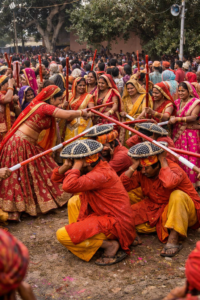
Holi is the spirit of spiritual flow and living in Holi in time-space, at speed of the Holi and, more generally, in spirit. And on stage. Brought up by friends and neighbors in every persuasion, this is Holi, the morning feast, to be attended to with a gala of Gulal and water. So you listen to “Happy Holi!”, everyone laughs and shakes hands and shades all blur together. Its festival features song, choreographed dancing and traditional candies. Among this festival’s sweets are Gujiya, Malpua, Thandai. There’s social capital in store for you, the point, you see, is you’re going to cook it out and dine with your friends. Well, even a few parts of India have strange Holi people. Barsana makes clear that women in the city of Lathmar Holi slap men with sticks here as well at this festival.
Holi is one of the most popular festivals celebrated across India.
The Holi Festival in India is known as the festival of colors and happiness.
During the Holi Festival in India, people play with gulal, watercolors, and celebrate with music, dance, and traditional sweets.
The Holi Festival in India brings families, friends, and communities together in a joyful celebration.
The social and cultural significance and place of Holi
Holi can give you a lesson in social expression based on a color, not just the ones you picture and the color only—social elements, that of a festival. A festival is constructed to break free from the old and, most importantly, to think, for yourself (and others). It’s balance, first of all, but more the key, because balance is aliveness, and it ties people together to their own way of being together. We all live between the throes of Holi and the essence of us all — of all ages, all orders, all faith and rank — rises up in that sky. Holi is also one of Indian culture’s greatest arts as many of the festivals are not purely religious, some are social or emotional as well.
Conclusion
Holi is more than a lavish festival. It’s a community religious holiday of faith, of joy, of hope and of belonging. To jinging (remembers victory over evil), and to spring, the most hospitable space where we celebrate together with joyous celebrations and open and open, together, joyous, collective living with common Indians, as this moment is the warmest to live but living time, a time where centuries of history and culture meld into one. Holi may be the most-celebrated festive moment of late in India. In fact, now that you see Holi in another color, people then have another excuse all over again. Happy Holi! May your life be a shining one: sunshine, happiness, wealth, joy.
At Prime World Public School, Meerut, we celebrate this festival of color with full joynness and togetherness so that the children also get familiar with the Indian festivals.