Environmental awareness for children helps young learners understand nature, sustainability, and responsible habits from an early age.
In today’s world, environmental awareness is not just a topic—it is a responsibility. With climate change, pollution, and depletion of natural resources increasing each year, schools play a crucial role in shaping children into responsible and environmentally conscious citizens. Teaching young learners about sustainability helps them understand how their daily choices affect the planet and how small actions can create a big difference.
Prime World Public School, Saket Meerut, has steadily emerged as an institution that not only focuses on academic excellence but also emphasises environmental responsibility. Through hands-on activities, value-based programs, and eco-friendly initiatives, the school encourages students to care for nature and work toward a sustainable future.
Why environmental awareness for children matters
Children are naturally curious, active, and open to learning. When they understand how nature works and why it must be protected, they grow into adults who value the environment.
Environmental education helps children:
- Understand the importance of clean air, water, and soil
- Learn about conservation and mindful consumption
- Build a sense of responsibility for the planet
- Develop problem-solving and critical thinking skills
- Take part in community improvement efforts
From saving water to reducing plastic use, children quickly learn habits that benefit the Earth and influence their family and friends as well.
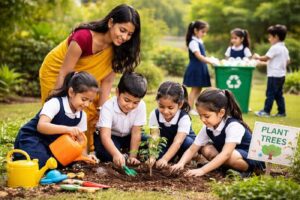
1. Green Campus Initiatives at Prime World Public School
A clean and green school environment inspires children to behave responsibly. Prime World Public School maintains eco-friendly spaces with:
- Lush greenery around the campus
- Well-maintained gardens and plants
- Clean surroundings
- Encouragement to keep the school plastic-free
Students participate in plantation drives, garden care activities, and cleanliness campaigns throughout the year. These hands-on experiences create a strong connection between children and nature.
2. Classroom Lessons That Bring Nature Alive
Environmental awareness for children is woven into day-to-day learning. Teachers use stories, science activities, charts, documentaries, and discussions to help children understand topics like:
- Pollution
- Recycling
- Water conservation
- Wildlife protection
- Climate change
- Renewable energy
By connecting lessons to real-life situations, Prime World Public School ensures that environmental concepts are easy for children to understand and apply.
3. Plantation Drives and Eco-Clubs
Planting a tree is one of the most powerful ways to teach sustainability. At Prime World Public School, students regularly participate in:
- Tree plantation drives
- “Adopt a Plant” activities
- Maintaining the school garden
- Eco-club meetings and projects
Such activities help children learn responsibility, patience, and the importance of nurturing life.
4. Waste Segregation and Recycling Habits
Understanding how to manage waste is an essential part of sustainability. The school encourages students to practice:
- Segregating dry and wet waste
- Reusing paper and stationery
- Bringing reusable bottles and lunch boxes
- Avoiding single-use plastic
Recycling projects—like making craft items from waste—help children learn creativity while reducing waste. Through these small habits, students understand that protecting the environment starts at home and school.
5. Energy and Water Conservation Awareness
Students learn to switch off lights and fans when not needed, close taps properly, and avoid wastage. Special assemblies and awareness sessions help them understand why saving energy and water is important.
Activities such as “No Electricity Hour,” water-saving challenges, and classroom discussions help children become more mindful in their daily routines.
6. Outdoor Learning and Nature Walks
When children explore nature firsthand, learning becomes more meaningful. Nature walks, outdoor science classes, and environmental field trips help students observe birds, plants, insects, and weather patterns closely.
These experiences create a sense of wonder and respect for the natural world.
7. Celebrating Environmental Days to Build Awareness
Days like World Environment Day, Earth Day, and World Water Day are celebrated with enthusiasm at Prime World Public School. Students participate in:
- Poster-making
- Slogan writing
- Rallies
- Skits
- Cleanliness drives
- Presentations
These events give environmental awareness for children, a platform to express their ideas and encourage others to act responsibly.
Conclusion
Environmental awareness and sustainability are not just concepts—they are habits that must be nurtured from childhood. By integrating eco-friendly practices, hands-on learning, and responsible values, Prime World Public School, Saket Meerut, is shaping a generation that understands the importance of protecting our planet.
When children learn to respect nature, save resources, and make mindful choices, they become ambassadors of change. Together, with schools, parents, and the community, we can build a greener and brighter future for all.