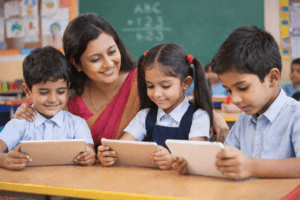
 Educational apps for kids are transforming the way young learners explore concepts, build skills, and develop creativity in today’s digital world. With interactive lessons, colorful visuals, and engaging activities, these apps make learning enjoyable and effective for children at an early age. At Prime World Public School, Meerut, we believe in using educational apps for kids wisely to support classroom learning and overall development.
Why Educational Apps for kids Matters?
For young learners (ages say 5-10), educational apps offer a few compelling advantages:
- They make learning interactive and often fun, with animations, gamification, and rewarding progress.
- They help children practise concepts at their own pace—whether it’s phonics, basic maths, reading comprehension, or problem-solving.
- For schools like Prime World Public School, Meerut, which emphasize all-round development beyond mere textbook learning, apps provide a supplementary resource to reinforce classroom lessons and home-learning.
- They allow learning to continue outside school, in pockets of time at home, travelling, or during quiet afternoons.
However, as with everything, the key is balance—ensuring screen-time is managed, and that children continue to engage in hands-on play, physical activities, social interaction, and creative expression.
1. BYJU’S – The Learning App
A leader in online education, BYJU’S offers colourful animations and easy explanations for subjects like Mathematics, Science, and English. It follows the CBSE syllabus, making it ideal for Indian students. For children at Prime World Public School, Meerut, it can reinforce what they learn in class while keeping lessons playful.
2. Khan Academy Kids
This free, globally trusted app makes early learning joyful through stories, songs, and simple exercises. It’s perfect for children aged 4–8. The best part? It’s ad-free and adjusts to each child’s pace, just like a caring teacher would.
3. Vedantu SuperKids
Vedantu brings live, interactive classes where children can talk, share, and learn in real-time. The SuperKids program focuses on English communication, maths, and public speaking — vital skills promoted at Prime World Public School, Meerut to help students become confident communicators.
4. Google Read Along (Bolo App)
Developed specially for Indian learners, Google Read Along helps children practise reading in English and Hindi. The friendly reading buddy, Diya, listens to your child read aloud and gives instant feedback. It’s especially useful for early readers and works even without internet connection — a big plus for accessibility.
5. Duolingo
This app helps students learn new languages, including English, through fun mini-games. For Indian students looking to improve vocabulary and pronunciation, Duolingo makes language learning stress-free and enjoyable.
6. WhiteHat Jr
Coding is the language of the future, and WhiteHat Jr introduces it in a fun, creative way. Kids learn logic, storytelling, and game design while developing problem-solving skills. At Prime World Public School, Meerut where innovation and curiosity are encouraged, such apps align perfectly with the school’s vision for future-ready learners.
7. TinyTap
TinyTap turns lessons into interactive games. Teachers and parents can even create custom activities! From English to General Knowledge, the app encourages hands-on participation — just what young learners love.
8. Meritnation
A trusted Indian app aligned with CBSE and ICSE syllabuses. It offers chapter-wise videos, quizzes, and worksheets for primary students. Parents can use it to revise lessons at home and track progress.
Choosing the Right App
Every child learns differently.
- For story lovers – Try Read Along or Khan Academy Kids.
- For visual learners – BYJU’S or Vedantu.
- For tech enthusiasts – WhiteHat Jr or TinyTap.
At Prime World Public School, Meerut teachers often suggest using digital resources alongside traditional methods to encourage balanced learning habits.
Balance is the Key
Educational apps should support classroom teaching — not replace it. Encourage children to spend limited time on screens, take breaks, and connect what they learn digitally to real-life experiences.
When guided by parents and educators, technology becomes a tool for creativity and curiosity, not distraction.
As Prime World Public School, Saket Meerut believes:
“Learning should be joyful, engaging, and empowering — whether in the classroom or on a screen.”
The Ministry of Education, Government of India also promotes the use of technology to support quality learning and digital education initiatives.
Conclusion
Choosing the right educational apps for kids helps parents and teachers create a balanced learning routine at home and school. From reading and maths to creativity and coding, these tools open new worlds for children. With thoughtful use, parents and teachers can help every child learn, grow, and shine — both online and offline.
For more tips on digital learning, visit Prime World Public School, Saket Meerut — where technology meets values to create future-ready learners.