Teaching kindness and empathy helps children grow into caring, respectful, and emotionally aware individuals from an early age.
In every classroom, children learn to read, write, solve sums, and explore the world through books. But beyond academics, there is another essential skill that shapes their character—kindness and empathy. These values help children grow into thoughtful, caring, and emotionally strong individuals who contribute positively to society. At Prime World Public School, Saket Meerut, the learning environment is built not only around knowledge but also around compassion, respect, and understanding.
Teaching Kindness and Empathy in School
In today’s fast-moving world, children face pressure from academics, social expectations, and even the digital space. Kindness and empathy help them build strong relationships, manage emotions, and understand different perspectives. These skills reduce bullying, improve teamwork, and create a healthy classroom atmosphere.
Children who learn to be kind:
- Make friends more easily
- Show patience and respect toward others
- Become better listeners
- Handle conflicts calmly
- Feel more confident and emotionally secure
Empathy—understanding how someone else feels—helps children realize that their actions affect others. When young minds learn this early, they grow into adults who are compassionate and responsible.
1. Lead by Example
Children learn the most by observing. When adults use polite words, show patience, and handle conflicts calmly, children naturally follow. Teachers at Prime World Public School model kindness through daily interactions—whether it’s appreciating effort, offering support, or simply listening with full attention.
At home, parents can also encourage kindness by using positive language, apologizing when necessary, and respecting each other’s feelings. Small gestures go a long way in shaping a child’s emotional habits.
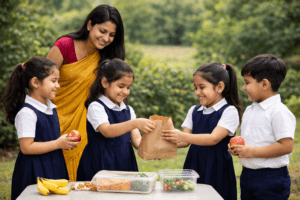
2. Use Stories to Build Emotional Understanding
Stories have the power to touch a child’s heart. Books, classroom tales, and even simple moral stories help children understand emotions like sadness, fear, joy, or frustration. When teachers discuss characters’ feelings and choices, children learn to see situations from different angles.
Prime World Public School often integrates storytelling, role-play, and classroom discussions to encourage empathy. These activities allow children to talk about their own feelings and understand others without fear of judgment.
3. Encourage Acts of Kindness and empathy in Daily Life
Kindness is not a one-time lesson—it is a habit built over time. Schools and parents can create opportunities where children practice kindness in small but meaningful ways, such as:
- Helping a classmate
- Sharing stationery
- Comforting a friend
- Thanking teachers, helpers, and parents
- Taking care of classroom materials
- Showing respect during group work
Many classrooms at Prime World Public School include kindness walls, gratitude circles, and helping buddy systems to promote positive behavior.
4. Teach Children to Identify and Express Emotions
Children sometimes behave unkindly because they don’t know how to express their emotions. Teaching them to label feelings—angry, excited, disappointed, confused—helps them respond better instead of reacting impulsively.
Simple strategies include:
- Emotion cards
- Daily check-ins (“How are you feeling today?”)
- Breathing exercises
- Calm-down corners
- Talking about problems instead of suppressing them
When children learn self-control and emotional expression, empathy becomes a natural extension of their understanding.
5. Encourage Teamwork and Cooperative Learning
Group activities help children experience different viewpoints and learn the value of patience cooperation and social learning development. Whether it’s a group project, sports, music practice, or art sessions, teamwork teaches children to appreciate each other’s strengths.
Prime World Public School provides plenty of such opportunities through inter-house activities, collaborative learning, and value-based projects where students learn to support and uplift one another.
6. Celebrate Kindness, Not Just Achievement
Children feel motivated when kindness is appreciated just as much as academic success. Praising gentle behavior, helpful nature, or respectful interactions boosts their confidence and encourages them to repeat those actions.
Certificates, appreciation notes, and classroom celebrations can help children understand that kindness is a strength, not an afterthought.
Conclusion
Teaching kindness and empathy is not an extra lesson—it is the heart of meaningful education. When children feel understood, respected, and cared for, they grow into confident individuals who extend the same compassion to others.
Prime World Public School, Saket Meerut nurtures these values through its supportive environment, interactive learning, and strong emphasis on emotional well-being. By working together—parents, teachers, and the school community—we can raise a generation that not only excels academically but also shines with humanity. A kinder world truly begins in the classroom