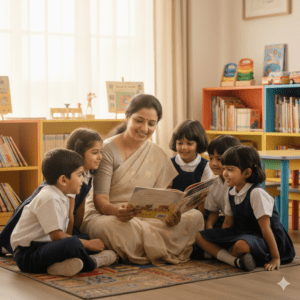
 Reading together for children is a powerful habit that strengthens language skills, improves understanding, and builds emotional bonding. At Prime World Public School, Meerut, we encourage shared reading to support early learning and overall child development.
In today’s digital world, where screens often dominate our children’s attention, the simple act of reading together remains one of the most powerful ways parents and teachers can nurture young minds. Reading is not only about learning words—it’s about creating memories, sparking imagination, and laying the foundation for academic success.
When parents, caregivers, or teachers read with children, they open doors to curiosity, creativity, and confidence. In this blog, we’ll explore why reading together is important, practical tips for making it fun, and real-life examples of how it shapes children into lifelong learners.
Why Reading Together for Children Matters
-
- Strengthens Parent-Child Bond
Sitting close, sharing a book, and exploring stories together creates emotional warmth. Children feel safe and loved, which makes them more receptive to learning.
- Strengthens Parent-Child Bond
Example: Imagine a parent and child cuddled on the couch reading Winnie-the-Pooh. The child not only learns words but also feels a deep sense of connection.
-
- Builds Language and Vocabulary
Children exposed to books early pick up words, sentence structures, and expressions more quickly. This makes communication smoother and enriches their vocabulary.
- Builds Language and Vocabulary
Example: A child who hears words like “gigantic,” “slippery,” or “whisper” in stories will start using them naturally in conversations.
-
- Improves Listening and Concentration
Listening to a story requires attention. Over time, reading together improves focus, patience, and the ability to follow sequences.
- Improves Listening and Concentration
Example: While listening to The Very Hungry Caterpillar, children learn to remember what the caterpillar ate each day, building both memory and attention.
-
- Fuels Imagination and Creativity
Stories transport children to new worlds, inspiring them to dream and think beyond reality.
- Fuels Imagination and Creativity
Example: After reading Alice in Wonderland, a child might create their own “magical garden” game at home.
-
- Encourages Empathy and Emotional Growth
Through characters, children learn about feelings, kindness, bravery, and challenges.
- Encourages Empathy and Emotional Growth
Example: Reading The Lion and the Mouse teaches children that even the smallest acts of kindness matter.
-
- Boosts Academic Readiness
Children who are read to regularly develop stronger literacy skills and perform better in school. Reading together introduces them to the rhythm of language, comprehension, and storytelling.
- Boosts Academic Readiness
How to Make Reading Time Effective
1. Create a Reading Routine
Make reading a daily habit—whether it’s before bedtime, after school, or during breakfast. Consistency builds a love for books.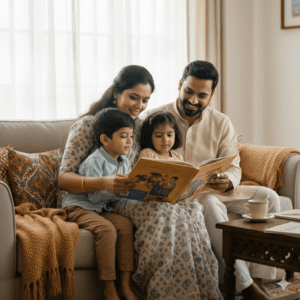
Example: A family that reads one story every night before bed finds their child eagerly waiting for “story time” each evening.
2. Make It Interactive
Don’t just read—ask questions, let children predict what happens next, or act out parts of the story.
Example: While reading Goldilocks and the Three Bears, pause and ask: “Do you think Goldilocks should open the door? Why or why not?”
3. Use Expression and Voice Changes
Bring characters to life with funny voices, sound effects, and dramatic pauses. This keeps children engaged and makes reading exciting.
Example: Growl like the Big Bad Wolf, whisper like Little Red Riding Hood, and watch your child’s eyes light up.
4. Let Children Choose Books
Give them freedom to pick what interests them, whether it’s fairy tales, comics, or picture books. When children choose, they feel ownership and enthusiasm.
Example: If your child is fascinated by dinosaurs, let them choose dinosaur storybooks—they’ll read more willingly.
5. Connect Stories to Real Life
Relate book lessons to everyday situations to make reading meaningful.
Example: After reading The Giving Tree, encourage your child to share toys or help water plants, connecting story morals to daily life.
6. Mix Reading with Play+
Combine reading with drawing, acting, or games.
Example: After reading Brown Bear, Brown Bear, What Do You See?, let your child draw animals from the story or play a “What do you see?” spotting game around the house.
Real-Life Reading Examples for Kids
Example 1: Reading in Classrooms
In a primary school, the teacher reads The Gruffalo aloud. She pauses to ask children what they think the Gruffalo looks like before showing the picture. Each child draws their version. This not only strengthens listening skills but also creativity.
Example 2: Reading at Home
A father reads Goodnight Moon to his toddler every night. Over time, the child begins finishing the lines: “Goodnight stars, goodnight air, goodnight noises everywhere.” This builds memory and a love for rhythm in language.
Example 3: Festival Reading Tradition
During Diwali, a family reads a children’s book about the story of Lord Rama. During Christmas, they read The Night Before Christmas. Linking books to cultural events deepens learning and family bonding.
Practical Tips for Parents
-
- Start Early: Even babies benefit from hearing your voice and looking at colorful picture books.
-
- Use the Library: Explore a wide range of books without having to buy them all.
-
- Be Patient: If your child wants the same book every night, that’s okay! Repetition builds familiarity and confidence.
-
- Celebrate Reading: Clap, cheer, or give a sticker when your child finishes a book.
-
- Lead by Example: Let children see you reading newspapers, novels, or magazines—kids copy what they see.
Long-Term Benefits of Early Reading
Children who grow up reading with parents are more likely to:
-
- Love books and become independent readers.
-
- Develop empathy and emotional intelligence.
-
- Perform better academically in reading, writing, and comprehension.
-
- Build stronger parent-child bonds filled with shared memories.
Most importantly, reading together plants the seed of curiosity that lasts a lifetime.
Final Thoughts
According to NCERT, developing reading habits at an early age improves language skills and academic understanding.
At Prime World Public School, Meerut we consider that reading together isn’t just about teaching words—it’s about nurturing hearts, minds, and relationships. Every page turned is a step toward building confident, imaginative, and empathetic learners.
So, whether it’s five minutes before bedtime or a fun weekend story hour, take the time to read with your child. The laughter, questions, and shared adventures will become some of the most cherished memories of their childhood.
As children grow older, they may forget the details of the stories—but they will never forget the warmth of reading with you.
After all, books are not just about stories—they are about building stronger families and brighter futures.